Month: December 2025

  • Experimenting with Mixed Methods

    As we were working in groups and deciding together how we want to get feedback and which methods we want to try, we decided to create a mixture of sections from our drafts. We deliberately chose rounds, that were not in the HOME framework to try out something new – for us and for the group. Moreover we picked rounds that could be hard/controversial to see what they are doing. I believe we need to acknowledge that this particular group is already used to a distinctive way of feedbacking. So it was interesting to see how a ‘new’ group, or a group who is used to be working with something else reacts and deals with the different suggestions and formats we were proposing. That gives me insight on to think about which methods I want to use for which group, how much time I need to set aside for explaining the specifities and how easy or difficult it is to pick up on a method, a certain wording that I am introducing and use it in the intended way.
    While I’m writing this I realize that my mind is mostly occupied with thinking about and catering to the group and thinking about them, and less with what kind of feedback I want or need in a certain moment. I believe that can be partly because with these experiments we are in right now, we are creating and feedbacking in an artificial laboratory-like setting. There is very limited time to first create and then think about “What (kind of) feedback do I need/want right now?” and negotiating everything with a group, balancing individual wishes with group consensus.
    Nevertheless, here’s my attempt of doing so:

    Affirmative feedback is really important to me. Often I’m quite insecure about my work and I know I work better, get a motivation boost, when receiving some kind of approval. But apart from this personal condition, affirmations of specific moments, ideas, thoughts, concepts within the art work, let me know of what I can build on, what is working already. I perceive that as very helpful for future processes with that art work. Since this refers often to specific moments/dynamics of the given work I feel this is more beneficial when continuing the work with that proposal, and less as an overall feedback, for conceptual processes. At least this is how I experienced it within our session and in past experiences with it.

    I often have a slight reluctance towards ‘tech stuff’, so the questionnaire was an interesting one for me. I think in setting up this round we were considered more with the frame than with the content. We could have paid more attention to the mode of questions we proposed in the online form, to work out more and be specific of WHAT kind of feedback we wanted to get out of this. Maybe balancing broader conceptual questions with more specific ones. As the questions sometimes were not clear or confusing for the feedbackers, I believe there should also be some effort put into guiding the individuals, maybe thinking of language accessibility etc. However, with all these issues, when I saw the answers, I was happily surprised. We got a multitude of interesting answers – oscillating between conceptual considerations, ideas connected to the piece, and specific actions and workings in the work. Although there might have been some individual unclarity towards the questions, in the end it doesn’t matter too much as we harvest from the whole group.
    After the session I was reflecting as well on the position we gave this section in the framework. As we put it in the very begin of the session (we thought it’s nice to have the individual answers directly after the sharing – not affected by a conversation) I felt that the question very much framed our field of interest and concepts, which -of course- can be a good thing. At the same time I am always quite interested in how my work is perceived, or better said, what is understood from my work, without laying out the concept or ideas beforehand. Therefore next time, I think I want to try the questionnaire as the last part of the session, maybe even at home, and directing the questions a bit more towards an outcome I am (or my group is) determining.

    Generally I would be very interested in looking into an overall dramaturgy of a feedback session, and although it is in the back of our heads when we talk about the sections, there was not really time and space to go deeper into that when preparing for our session this time.

    Zooming In – Finding Out

    Here are some topics that came up in our feedback session – throughout one or more round, trough one or more person(s)

    audience’s consent

    politics, media – hierarchies in distribution of information

    audio description (and our – the maker’s – relation toward it)

    audience spacing

    objects on stage

    reality of a performance context

    At this moment it’s not clear if we will continue with this performance proposal concretely, with some of its ideas or if we start another process from the start. Some people in the group were changing and it has not been concluded on how to deal with the situation.
    In the process of thinking about that I am observing that the more open a feedback is, the better it can be transferred to any other process, the more specific thew more likely it is more useful for this specific one. So this is a learning I want to keep with me on my journey of creating frameworks.

    We had, for example, the topic of audience consent, about touching the ankles, being photographed. Funny enough that usually I am quite aware of this topic and in this process I just didn’t think of it, this is a consideration that I will bring into future processes, no matter what it is about. I also like the idea about playing with content notes in general and playing with expectation, eg writing something that is not gonna happen. So for the next creation round I will bring the awareness about the audience for sure, and if it’s fitting the work, we can have a look into the topic of content notes/warnings as well.

    Because of the uncertainty on what my group will work in the next round it’s hard to tell what EXACTLY I will bring from this feedback to the upcoming. I like to perceive receiving feedback in line with Le Guin’s carrier bag, meaning that I have this smorgasbord of input, transferred knowledge, shifted perspectives that I can pull them out whenever it’s needed.

  • Drafting my own Feedback Framework

    BRAVE SPACE

    I believe a formalized feedback method should first and foremost create a brave space, primarily for the maker, who is sharing their work, but as well for all other participants. To ensure this, I believe it’s essential to look at the power dynamics at play, acknowledge them and if needed and wanted balance them through specific action, formalized language and question.
    This thought is reflected in my two main feedback sources, I am focusing on it as well, as I am influenced by researching kink and consent negotiations – as there is obviously knowledge about power dynamics, as well as by the work of Maike Plath about the Veto-Prinzip® (Veto-principle), that is dealing with balancing out hierarchical structures in group settings.

    Sharing (art) work can be a vulnerable position, so it’s essential to have strategies in place to protect the maker and ensure that they don’t enter a space of defensiveness. In the framework I am proposing I use some of the know strategies:
    – role of the moderator (holds the space, takes care of the participants, manages time and space)
    – setting the space BEFORE the showing
    – asking for consent
    – use of formalized language

    THE SOURCES
    For designing my own feedback framework I draw my main inspiration from three different sources.
    – HOME Feedback Framework
    – DAS Arts Feedback Method
    – Maike Bleeker’s Doing Dramaturgy: “Seven modes of dramaturgical engagement”

    In some sections I state very clearly where the ideas come from, sometimes it is a bit tricky, as concepts get mixed, appear in all of the sources and I do add my own flavor as well. I do my best to be transparent about whose concepts I am using, in the particular parts.

    DRAMATURG VS AUDIENCE
    I chose Bleeker’s work as food of thought for this process as I like the notion of dramaturgical thinking in a feedback process, as I have met it in the HOME framework. In her book Bleeker describes modes of engagement in which a dramaturg can contribute to the work. I consider her input as valuable when arranging the different rounds. Nevertheless, in the HOME framework I experienced a lack of intuitive feedback, a space for resonance apart from strict operations – a feedback, I wouldn’t assign to the role of a dramaturg, but to a first audience. I value both perspectives, and want to include them into my framework. That’s why I choose different sections to integrate these different approaches to feedback, allowing the feedbackers to oscillate between different perspectives. For me that’s also a way of thinking of accessibility, as not every group or individual is trained in a way dramaturgical thinking. In this way the method is applicable to a variety of different groups. I suggest that the rounds (5.) Dramaturgical Operations and mayb (6.) Concepts can be removed from the script, if the artist and the moderator decide so, according to the feedbacking group.

    MODERATOR
    The role of the moderator is a crucial one. I see a connection between this role and Bleeker’s notion of creating conditions as a dramaturg. This involves “creating and cultivating a space for things to happen”. The person is making sure the environment is supportive and is facilitating a respectful conversation, mediating between the participants checking back with the maker and the participants if things are unclear or need to be discussed. Their responsibility is fostering a fruitful exchange.


    THE STRUCTURE
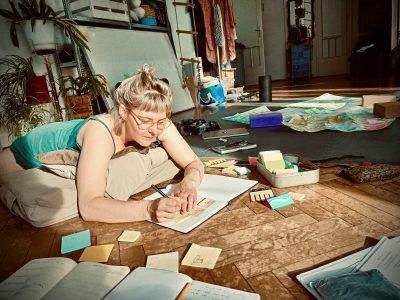
     

    1. CREATING THE SPACE (mixed sources)
    For me it is important to create the space of sharing and feedback before the showing starts. Therefore as first thing the moderator creates the space, welcomes the group and has a short talk with the artist. It is a coming together and setting the mood for all participants plus an introduction into the world of the maker.
    Here’s are some examples of what  can be discussed in this section: Everything has to be consensual with the maker. They decide which info they wanna give before the showing, which not. Depending on what they are going to share they might not want to give away a topic or the framework of discipline etc.

    What should the feedbacking audience need to know about the project?
    Who are you? How do you frame your discipline?
    What is the status of the work? (eg. first research ideas, close to premiere)
    Is it complete or are you showing some parts?
    What is the idea? What is the topic?
    What is your role in the work?

    If the maker wants, they can pose a question in the end of this section. They might want to have feedback on something specific, so the audience could pay attention to this while watching.

    2. SHARING
    The artists get ready and shares their work with the group. I intentionally called this section sharing, not showing, as I want to emphasize the collective character of a feedback session.

    3. ONE-TO-ONE TALKS (source: DAS Arts)
    Directly after the showing the moderator asks the group to pair up, find a nice spot – this can be inside or outside the studio – and return after 10 minutes. It might be helpful to determine a precise time when everybody has to be back. The duos are processing what they’ve just experienced, they can discuss first impressions, find words, start organizing their thoughts and if wanted take some notes.
    This 10 minutes provide time for the maker to calm down, step out of the performer’s role, if they were performing, get some water and some distance to the sharing. They shouldn’t eavesdrop to the duos’ reflection, better concentrate on themselves getting in the headspace to receive feedback.
    The moderator uses the time to set the space for the session. This could mean setting up chairs or floor space, preparing the flipchart and markers, checking in with the maker.

    4. AGREEMENTS
    After the 10 minutes the group gathers back and the moderator sets some guidelines for the session.

             maker’s consent to feedback
    The moderator asks the maker if they consent to receiving feedback in the agreed framework. The consent can be withdrawn any moment.

             maker remains silent
    From now on the maker does not comment on feedback or answer questions that come up. If they need clarification on statements form the group and the moderator doesn’t ask for clarity, the maker can ask for it.

             flipchart
    From now on the moderator takes notes of all the sections. It is important that this is happening on a flipchart, everyone should be able to read it and the paper will be gifted to the maker in the end.

             plus one-tool (source: DAS Arts)
    The moderator explains the plus 1-tool to the group, to be used throughout the session. At the beginning of each step they may remind the group to use it.
    The tool is used whenever a thought is mentioned and another person had the same thought as well. It not used when the other person didn’t have the thought by themself but thinks it is a valid idea. This tool saves time and provides a weighing of some thoughts. hence when a lot of plus ones are used for a specific comment, it carries more weight than others. I believe this offers some valuable insight for the maker. The plus ones are marked with “I” for each plus one behind the comment written on the paper.

             we feedback what is there, not what it’s not there
    A small reminder to discuss only things that were actually in the sharing, not imagining other stuff. On the flip side the moderator ask maker if there was anything in the sharing that the group should try to not consider.

    5. DRAMATURGICAL OPERATIONS (source: HOME)
    The group collects all the dramaturgical operations in use, they have seen in the sharing. when an operation is stated the person needs to refer it back to what was happening in the sharing and why they think this operation is in place.

    6. CONCEPTS (source: HOME with a twist)
    The group states all the theoretical and artistic concepts, they have perceived throught the sharing. They do so by using the formalized sentence:
             “I see the concept of … , because …”
    This means the feedbackers have to explain their statement. This can be either done by referring to dramaturgical operations, as it is established by the HOME framework. But it can also be done by bringing up associations, interpretations induced by the sharing.
    I am introducing this extension to not only value the dramaturgical reading but the lived experience of educated audience as well. The dramaturgical lens is precious, but so is personal experience. I want to embrace the feedback of dramaturges, at the same time, the feedback of a first audience as well.

    This round, together the previous one is connected to Bleeker’s notion of analyzing. It’s about to see how the work is constructed and pointing out implications of this structure, as well as analysing how things trigger associations and interpretations.
    Moreover I see a link to Bleeker’s mode of articulating. She refers to the term of active mirroring which is a way of “using language to put into words one’s observations and what these evoke in terms of associations and interpretations.

     7. AFFIRMATIVE FEEDBACK (source: DAS Arts)
    After scanning the work for operations and concepts it’s time to focus on the strengths of the work. By using the sentence
             “What worked for me …” and explaining “Why”the group states what is already functioning to them. I believe this is a powerful tool as, for me personally it is a good thing build on things that already are in there and work. I usually learn from encouragement the best. I am aware that this is feeding the ego, but being in the vulnerable position of sharing unfinished work, anyway questioning choices a lot myself, it can be soothing the be gifted something to hold onto in the process of the feedback session, as well as the process of the project itself.

    8. PERSPETIVES (source: DAS Arts)
    In this section the moderator invites the group to adopt a particular perspective, speak from it and articulate their needs. They use the sentence:
             “As a … I would need … ” and if needed a short description “why”
    The perspective can be a position the person holds in reality not. So the feedbackers might also take on imagined roles. According to what perspective are chosen this can offer a wide range of insights. It can be looked at a professional toolbox, when referring to roles in or around the field: choreographer, dramaturg, costume designer, musician, theatre pedagogue, scholar, journalist etc. It can also be spoken from a perspective of an audience member, human, or even imaginary like alien, animals, plants etc. – depending on the verbalized needs.
    This round offers a space for critical thoughts. I am aware that these comments are highly subjective, but through the stated perspective this becomes transparent. Hence, like in the concept round I wanna emphasize the lived experience.

    9. OPEN QUESTIONS (source: DAS Arts)

    The group gathers open questions.

     Why – Who – When – What – Where – How

    Obviously the maker doesn’t answer but can take those question for future processes. This round is opening up new spaces of reflection, the feedbackers can put emphasis on specific things. they think are important and want to encourage the maker to take a closer look.

    I connect this round with Bleekers’s dramaturgical mode of questioning, in which the dramaturg is raising awareness about choices, decisions and consequences. Drawing from the work The Practice of Dramaturgy (Georgelou, Konstantina et al) who mentions the notion of dramaturgical questioning, that is understood as activation of potential. The mobilizing questions serve as a catalyst that redirect “attention from creation as expression of personal intentions and ideas toward the logic immanent to the creation-in-becoming.”

    10. PEER WISDOM (mixed sources)
    In this round the group is invited to share references, advice, solutions, technical knowledge and everything else the group needs to state. I am proposing to ask for specific consent before stating the thought, which means to describe what you are intending to share and why you think this can be valuable.
    This section connects to Bleeker’s notion of feeding, as the dramaturg’s task is feeding all kind of information to the artist, from theirs own experience to theoretical background info. Depending on the maker and their work’s status, this might be helpful of not, that’s why I insist on asking for consent.

    11.  OPEN DISCUSSION or GOSSIP ROUND (source: DAS Arts)
    The maker get to choose if this round is conducted as an open discussion or as a gossip round.

    open discussion
    As the name reveals, it is an open format of discussing. The maker is allowed to speak, but makes sure not to go into defending the work. They take the lead in the discussion and decide about the focus.

    gossip round
    This round is about simulated gossip, which means the group forms a circle -without the maker and the moderator- and talk about the work as if the artist weren’t there.

    12. PRESENT and MAKER’S WORDS (mixed sources)
    It is very important to me to understand receiving feedback as receiving a gift. This notion of the present is a kind one and a way of respecting the feedbacker’s time and effort. On the other hand, as I wrote in a former blog entry, if you don’t want to accept a present you don’t need to, as noted by Buddha in a famous telling of him.
    I want to emphasize this notion of a present by the action of the moderator who is taking all the leaves of paper that have been written in the session, rolls it and hands it to the maker as a gift.
    With this concluding action, the moderator also gives the floor to the maker, who can say some last words to the group, reflecting about the process.

    13. ECHOES
    After the maker has finished the moderator takes over one last time explaining the very last thing to the group. They are asked to let everything sink in, continue their day and some hours later, maybe in the evening at home, they send a message to the maker. This has a quite personal touch, it is up to the individual if they choose text or voice message, email, letter or other channels. This message can contain any leftover thoughts, personal ideas, advice, associations, experiences that connect to the work. What did resonate with you from the sharing or the feedback session?

    I am proposing this round with the thought of a delayed feedback. Time is an important factor as the feedback session is quite strictly organized. Sometimes we need time to digest, sometimes valuable things emerge after some time has passed. Furthermore I want to acknowledge that people have different ways of flourishing, of sharing their thoughts. I believe it’s essential to factor all this in.

     I am very curious to try out this framework.

  • The HOME Framework – A Reflection

    The HOME Feedback Method is a carefully thought out system, where each round depends on the one(s) before, thus, there is an overall dramaturgy of the whole session as well as a guideline for making an argument for the feedbackers.

    After the maker’s artistic offering, the essential, obligatory question for their consent to receive feedback and a brief personal reflection of each participant, the first collective round is the description of the sharing. As easy as it seemed in the first place, it soon turned out to be quite difficult, as the feedbackers are asked to use unloaded language as much as possible. Although I understand the approach, this creates some issues, as this is a skill that has to be learned and trained thoroughly. So people new to method need explanation to some extend and multiple sessions to practice this competence. Naturally when we first met the method this first descriptive round took a whole lot of time, going into detailed observations while finding the right words for it. The more the group becomes acquainted with this procedure, the easier and the quicker it will get.
    Apart from that, in my opinion this descriptive part takes quite some time to outline and discuss about ‘unnecessary’ details. In this first round the group might not know, which description they might need in the later phases of the process, so the strategy is to throw in everything as many, as particular bits of information as possible. In my experience a lot of those details are not very relevant in the bigger picture of feedbacking the work, yet they take up a considerable part of time and space in this process.

    After reconstructing the showing it is time for processing all the information we gathered. Building on the preceding description, the group identifies which dramaturgical operations were used. I find this super interesting and enriching, both to engage with it as a feedbacker, as well as the maker whose work is analyzed this way. Together with the following round, the identification of concepts, I connect this phase a lot with the notion, we have been engaging in within different modules, ‘thinking like a dramaturg’. The processing round works like an x-ray, it lets us see the structure within, the cornerstones on which the work is built and which building blocks were used. I experienced this as the essential part of the whole framework. It is unbelievably valuable to get this x-ray image handed to you without any judgement. Consequently it is on the maker what to with this info.
    However, I believe that this phase works quite well in the context of our program, because we simultaneously engaged deeply with the notion of dramaturgical operations in another module. We have built some collective knowledge beforehand, on which we could base our processes and therefore thrive together, feedbackers and makers.

    The next phase gives the group the opportunity to bring a magnifying glass to a specific aspect of the work. With a recommendation, an invitation to consider a specific issue, perspective or component. These topics had to be mentioned in every preceding phase, which I consider profound argument. It gives these considerations a depth, a reason to be acknowledged. I read this as an effort to contrast subjectivity and random claims. I do appreciate the highly formalized language that is used. “I would invite you to consider…” gives a clear frame, it supports upholding a safer space and prevents language to be used unintentionally.

    A similar notion, I find, in the following round of permissioned opinions and references. Where it is obligatory to ask for consent to share personal thoughts, either an opinion or reference or anything else that needs to be shared at that point. Whereas I do value the asking for consent to bring in any subjective reactions, I find it hard to consent to something that I don’t know what it is going to be. In my experience so far with this method, no maker ever said no to an offered opinion, but we were using it mostly in a laboratory setting, where it was more about the feedback framework that about the work itself. I believe this approach could change in the open field of artistic sharings and at this point the question of consent will get essential and could turn out to be problematic, when not further specified than a generic question.

    To wrap up the session, the word goes back to the maker, who was quite silent and mostly listening up to that point. This is a very powerful tool, as it prevents the maker to go into defensive mode during the feedback session, yet they have the last word, a chance to state what stays with them, to thank, to conclude the session. As I am engaged with the topic of power dynamics, artistically and socially, I find this a clever way of balancing hierarchies, which a crucial aspect of feedback giving.
    Generally, I believe the HOME method has a quite high threshold to be accessible. It can thrive in a frame like the master’s program, where we have time to develop skills together, common knowledge and a specific, informed language as a group. Yet, I don’t see it as a method that quickly can be used with random peers.


    Maybe because of the method is grounded in coding, is busy with analyzing, data processing and classifying, it sometimes feels a bit dry (and I’m aware that this is loaded language). Besides all the benefits this can bring, the described dramaturgical x-ray image, that I highly appreciate, I am missing some soul, some subjectivity, some associations, dreams and intuition. I am aware that there is a small space for it in the method, but it feels too narrow, too jammed between the rational rounds.

    Examining this framework gave me some valuable ideas on how to proceed with creating my own method. I am excited!

  • Awareness of Ulterior Feedback

    Between all the negotiation of formalized feedback frameworks, which, I firmly believe, are highly valuable, I would like to take a moment and focus on the importance of what I decided to call ulterior feedback.

    What is it?
    Ulterior feedback can come in many forms, if we are attentive to it. How does the audience behave, react, not react within a showing, performance experiment or artistic offering? Is there nervous laughter, is there wholehearted laughter, concentration, reaction. How is their physical and facial expression? During the showing, after the showing, in the feedback session when they talk about their experience?

    How can it help?
    In contrast to a set framework where we often take on the role of a dramaturge, this feedback comes from natural behavior, sometimes unconsciously, so this plays more into an audience perspective, human reactions, when we feel a certain way. For me as a maker it can be interesting to observe these in certain moments to get specific feedback for specific moments or set ups – like a comedian who observes if a joke is landing or how the audience is reacting to it and then learning from it, maybe adjusting the set.

    What can be pitfalls?
    Of course, I think we shouldn’t take that at face value. This kind of feedback is highly personal and might involve factors I as a maker don’t have access to (like current personal state, personal history). But I think observing similar reactions within a group of people can be a pointer to something interesting.
    I feel there could be also a danger of over- or misinterpreting things, so I would suggest staying alert and approaching this kind of feedback gently.
    Lastly I believe it also comes down to the capacity of concentration, meaning when performing your own work or receiving feedback, I might not have time or space to be aware of those little details.
    That’s fine, I see ulterior feedback more as a supporting sidenote that can come into play and give info when something pops up, or even as a conversation starter to then dive deeper.

  • My HOME Feedback Session

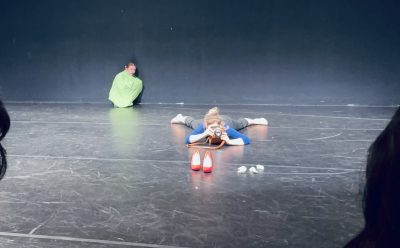
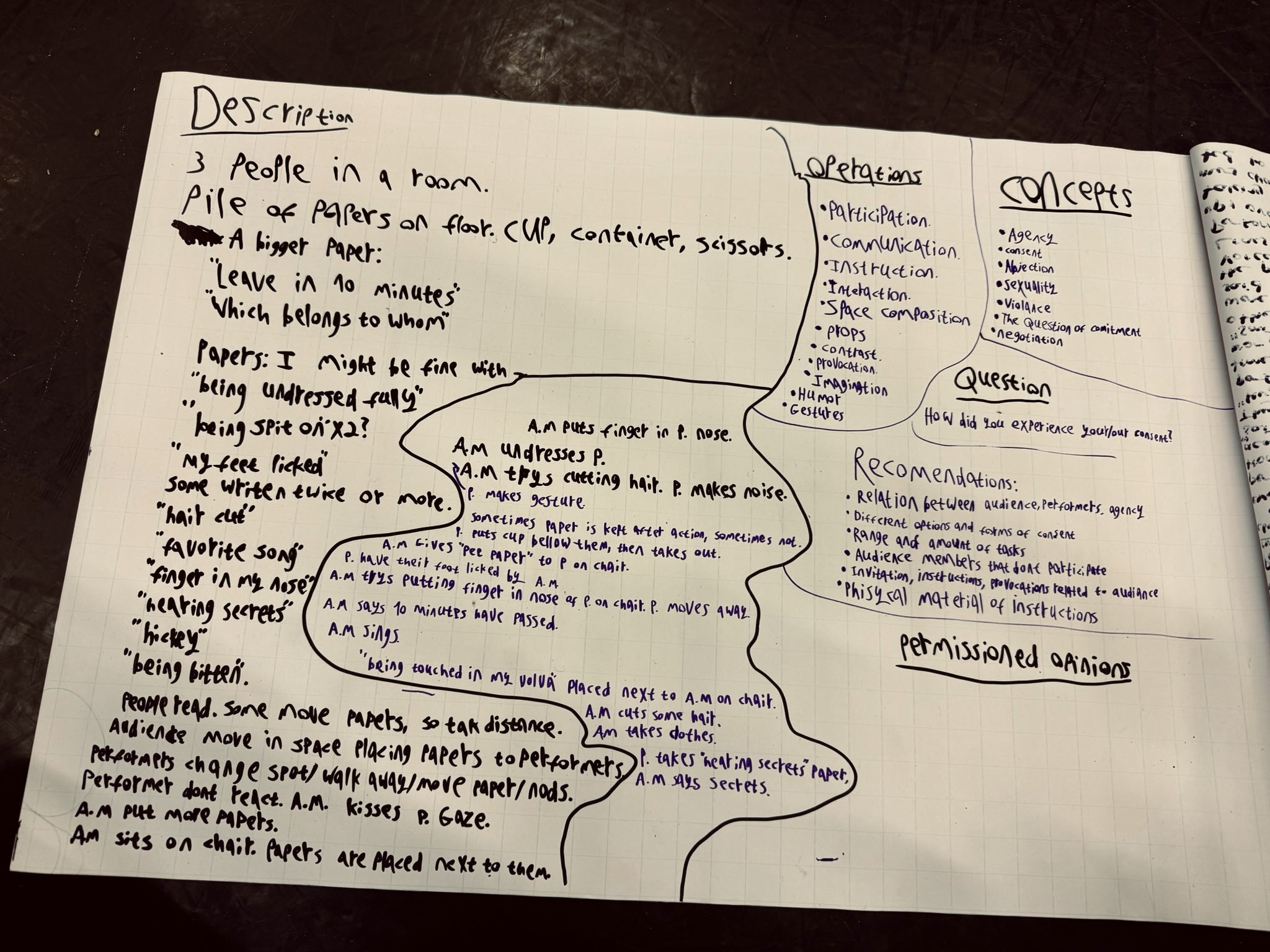
    It was quite interesting to experience how the HOME feedback method was applied to this type of work. With so much simultaneity happening in the space, plus the multiplicity of focus that is shared by the performers as well as the participating audience could make it challenging to describe and feedback the work. The feedbackers agreed on mostly not describing the showing linearly but collected what was written on the given papers and their experience with the respective actions. So the organization of the performance wasn’t determined by time but by other topics, which I experienced as beneficial. The group identified various dramaturgical operations and concepts. Some of them were a big part of the creation process – or at least discussed or mentioned, some of them brought a fresh thought to the work and led to opening up new perspectives.

    I would differentiate between two types of feedback in this session. There was conceptual feedback and feedback concerning the construction or crafting of the experiment. Although they have different approaches, I believe, they are inseparable, as the content is conveyed through the form and determined by it. For the sake of some structure I will organize it accordingly, but the boundaries will dissolve once we get deeper in medias res.


    CONTENT

    audience’s agency vs clarity

    Obligation was mentioned as concept and noted as question of commitment (from the audience’s side). Moreover we were recommended to have an eye on audience members that don’t participate. I understand this as the topic of the audience’s agency. How can we propose a game that the participants want to be part of, so getting their consent, but at the same time opening the door for them to withdraw their consent and value their saying no? I believe that is a crucial question in this work, as it deals literally with this topic on a conceptual level. Negotiating consent, not only from the performer’s side but also from the audience’s is a big part of this work, therefore this we will revisit this point next time we are working on this draft.

    involvement

    We received a suggestion to look closer into the relation of

    invitation – instruction – provocation

    In my opinion this connects to the first topic, about how we want to approach the participants. How we want their agency to be encouraged or declined. I believe the focus on the mentioned distinctions can be a tool to clarify what the actual experiment is, which kind of game we want to play and what the thematical focus should be. Thus, if we would continue with this work, I would take this as a priority for the next research phase, where I would like to find some clarity in the experiment’s structure and therefore concept. In the course of this hypothetical exploration I would apply the proposed lens on invitation vs instruction vs provocation in order to clarify and differentiate the audience’s involvement.

    forms of consent

    Another recommendation was to consider different forms of consent. This was a big part of our discussion in the creation process, whether consent shouldn’t anyway always be verbal and how ethical it is the assume other ways of giving consent. The feedbacker’s comment makes me think that it could still be an interesting topic to examine, when is clarity needed and when ambiguity could be valuable. This question is in the core of this work, but also of my own artistic journey in general. At the same time the balance between concreteness and abstraction, clarity and opacity is a recurring topic in the process of my artistic work, thus, I will keep that in my pocket for any future processes.


    FORM

    tasks

    We were recommended to consider the range/amount/spectrum of tasks we are offering the audience. I think this can be a crucial consideration, but first there needs to be a clearer shape of the actual game/interaction we are creating. Once this has gotten clearer, we could start thinking about the amount and range of thematic offerings we are suggesting in the work.

    materiality

    The invitation of reconsidering the material of the instructions, which was paper, is an interesting one for me. As I am working with this paper format throughout many of my research proposals, it was obvious using this for this experiment as well. In my bigger frame of research I am interested in the materiality of paper, but also focusing on it as a medium a holder of rules or information. As exactly that we were using it in this showing, so apart from being a handy prop, using this paper whenever it can be interesting in the frame of various experiments and projects, is building my research. So I am going to drop this proposition for now. However, I will keep it somewhere in the back of my head, as I feel, from time to time, it is good to revisit choices that are somewhat entrenched and question if they are still the right ones at the given moment.

    The overall feeling I have after being part of the showing and the feedback session is that we would need to work on clarity. Through the feedback process I got some approaches and input on how to do deal with that task. Seeing other people engage with my artistic thoughts and processes in a non-judgmental way made me enthusiastic. I understand (my) art-making as a deeply relational process it gains its meaning through being witnessing and engaging.
    Thank you!